
April 2026 - Notes on Italian History
What has caught my attention this month

History is a field that is constantly revised through new discoveries, methods, and questions. What we believe we know today is only provisional: tomorrow, it can be confirmed, or rewritten.
That is what draws me to history: its ability to renew itself over time.
I try to keep myself updated on recent research connected to Italy’s past as a way of staying close to this process.
This selection brings together a small number of articles and studies that caught my attention over the past weeks. It is not meant as a comprehensive overview, but as a personal, curated snapshot of ongoing research and occasional findings.
What Did Pompeian Homes Smell Of?
A recent study on the organic residues found in two incense burners offers new insight into domestic religious practices in ancient Pompeii.
Alongside plant remains of local origin, such as laurel and mulberry, the study identified aromatic resins from Africa or Asia and possible traces of wine, which may relate to the ritual known as the praefatio.
Ashes from Pompeii: incense burners, residue analyses and domestic cult practices
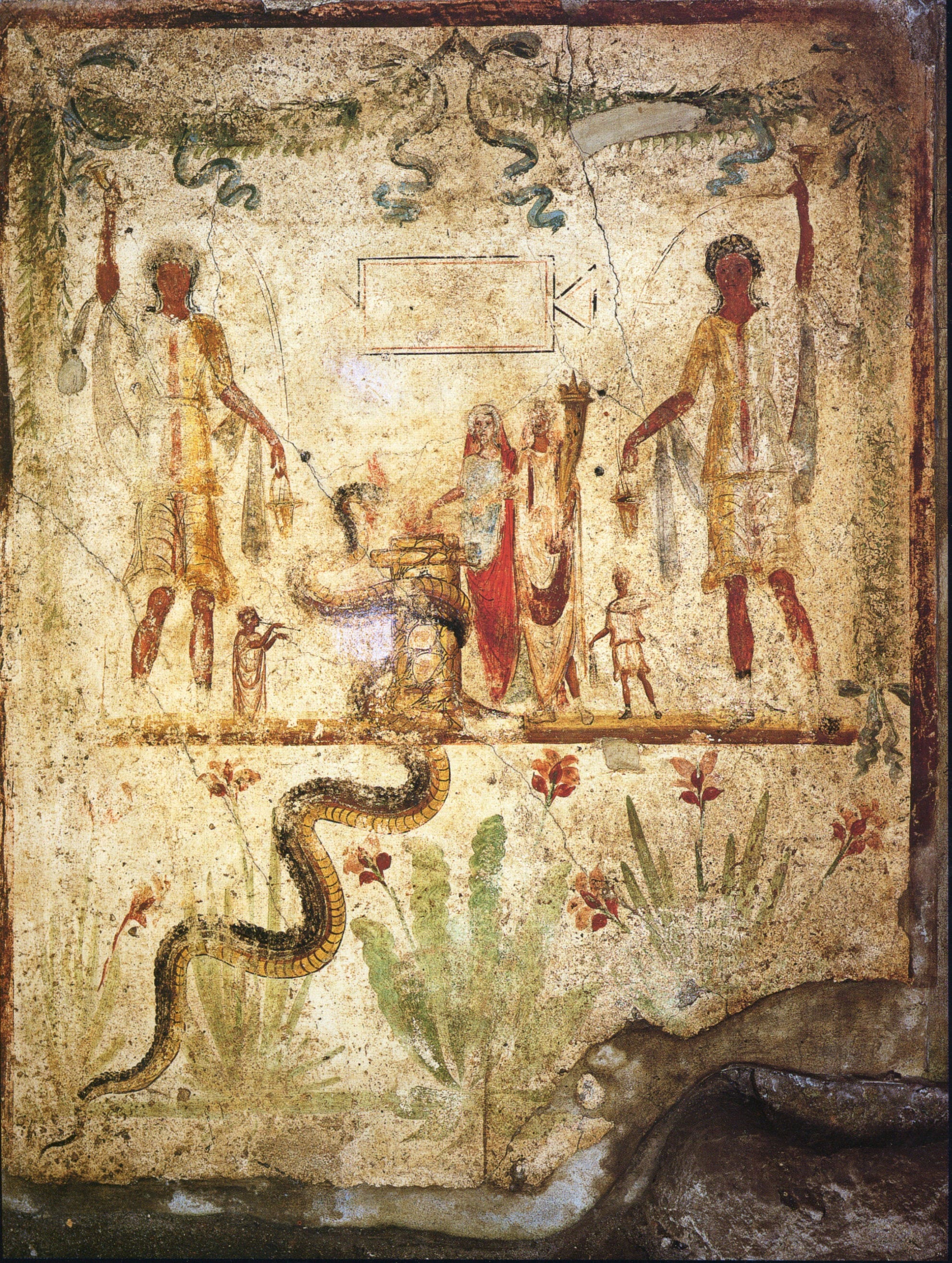
Pompeii, Roman fresco from the lararium of the house of Iulius Polybius.
A Roman Sanctuary in Germany, Reconsidered
Excavations carried out in Frankfurt have brought to light a large Roman cult district at Nida, uncovered during the construction of a school. The site includes multiple buildings, shafts, and pits used for ritual depositions.
The material recovered is unusually rich: thousands of fragments of painted wall plaster, coins, fibulae, and animal and plant remains, likely linked to offerings and ritual meals.
Among the finds are also a bronze statuette of Diana, a dedication to Mercury dated to 246 CE, and, in one case, a human skeleton deposited in a well.
Unlocking the Sacred Landscape of Roman Nida
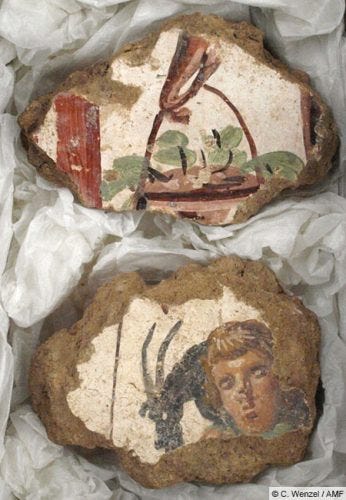
Two fragments of painted wall plaster recovered in the cult district. (© C. Wenzel / AMF)
A Cup from Hadrian’s Wall, Found in Spain
Fragments of a bronze cup discovered in central Spain carry a schematic depiction of four forts along Hadrian’s Wall.
The object, made in Britain in the 2nd century CE, appears to have travelled far from its place of origin.
Its form is simple, a drinking vessel used in daily life. The decoration, however, fixes specific places along the frontier. It may have belonged to a soldier who returned home, bringing with him a small record of where he had been stationed.
1,900-year-old souvenir cup featuring Hadrian’s Wall and Roman forts discovered in Spain
Read here the original article.
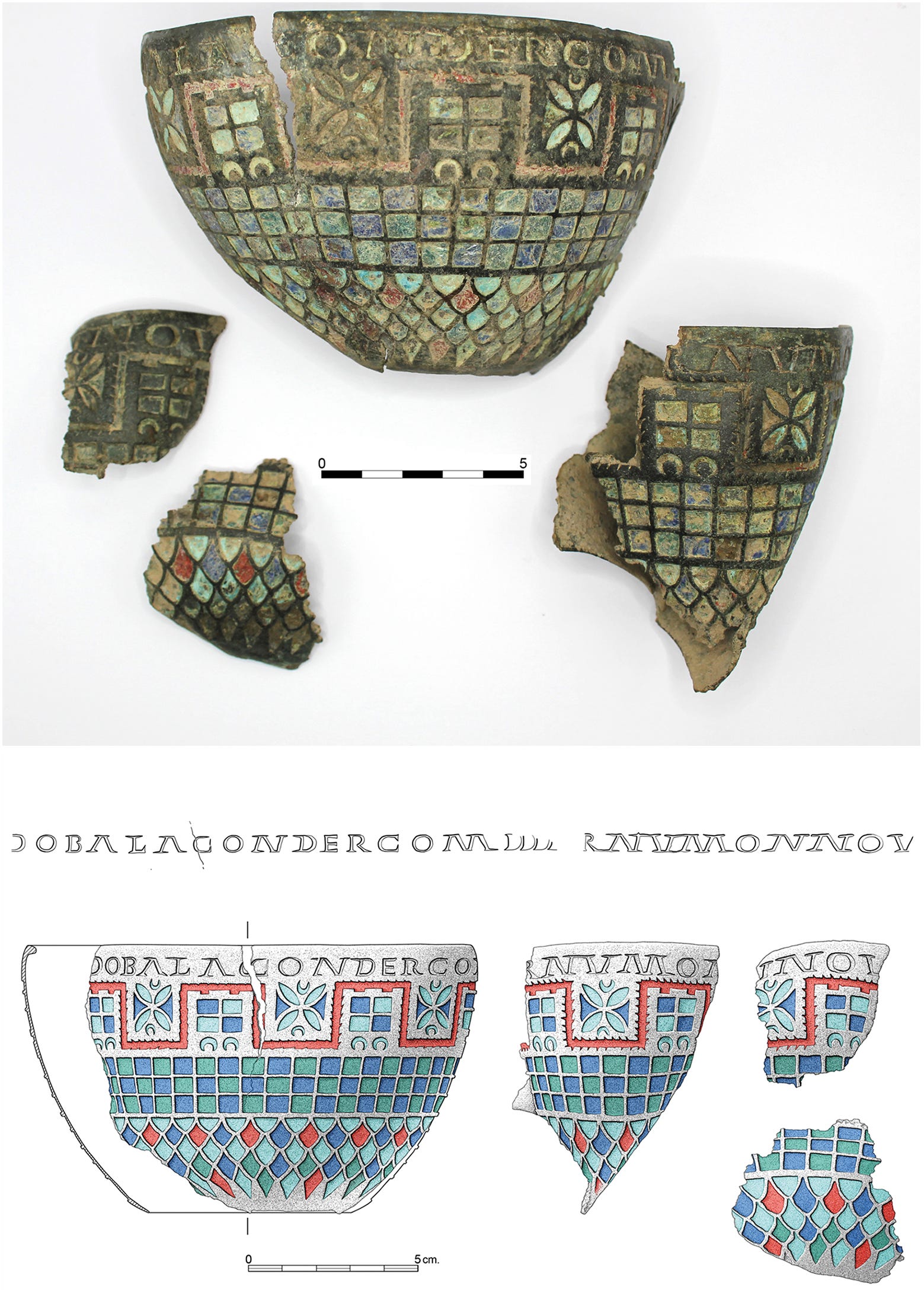
The Berlanga Cup. Photograph by Roberto De Pablo; drawing by Francisco Tapias.
Read also

How many exciting findings!